
Looking Past the Noise: Why Post-Midterm Cycles Historically Reward Balanced Portfolios

20 October 2026
As the upcoming U.S. midterm elections approach, campaign headlines and policy speculation naturally introduce short-term volatility into financial markets. It is common during this phase of the electoral cycle for investors to feel cautious and consider waiting on the sidelines until the outcome is settled. However, financial market history reveals that pre-election volatility is typically a seasonal reaction to political uncertainty rather than a sign of economic weakness.
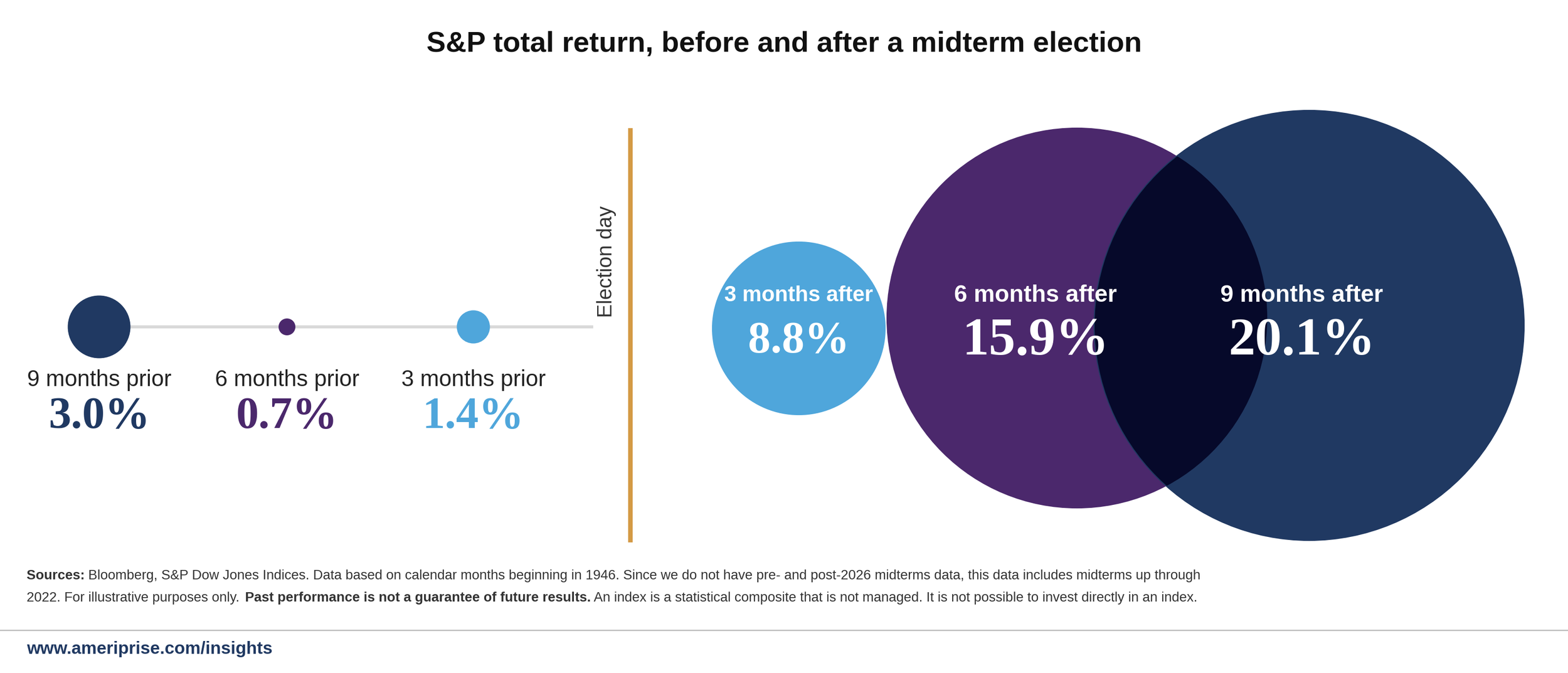
The historical precedent following midterm elections offers one of the most reliable track records in market analysis. Once ballots are cast and policy visibility returns, markets historically stage strong and sustained recoveries— regardless of which political party controls Congress. Since 1950, the S&P 500 has delivered positive returns in the 12 month period following every single midterm election, averaging an advance of approximately 14% to 15%. Furthermore, bond yields and credit spreads tend to stabilize as legislative agendas clear, creating an exceptionally supportive backdrop across asset classes. Long-term returns from investing in a US Equities and US bonds portfolio remain attractive regardless of politics.

For investors seeking steady compounding, a diversified multi-asset allocation provides the ideal framework to capture this post-election momentum while mitigating interim swings. By pairing high-quality equities that participate in the market's relief rally with resilient, income-generating fixed income, a balanced portfolio offers both capital appreciation and reliable downside protection. Looking past temporary political noise and staying invested across balanced asset classes ensures portfolios remain fully positioned to benefit from this favourable historical cycle. Strategies offering continued market exposure, good diversification and some downside protection look well-placed for the current environment.